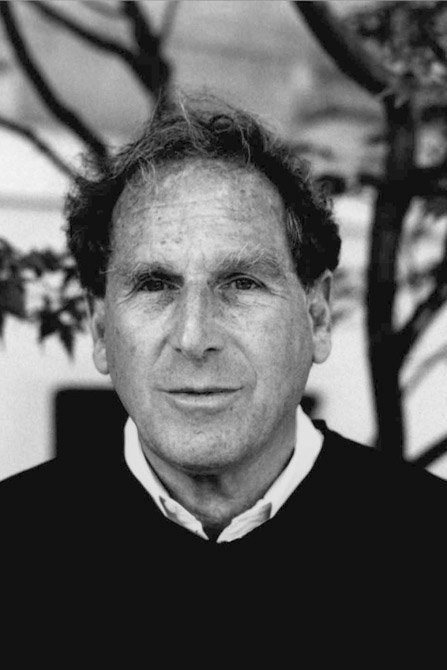
Nathaniel Dorsky
Raised in New York on a steady diet of Westerns and Disney True-Life Adventures, Nathaniel Dorsky started shooting 8mm movies at the age of eleven. In 1963, when he had just turned 20, he made Ingreen, a boldly symbolic psychodrama about a young man’s sexual coming of age. At that film’s premiere, he met soon-to-be fellow filmmaker Jerome Hiler, who would become his partner in life and a major inspiration for his work. (“We were filming for one another,” Hiler recently said.) In 1971 the two moved to San Francisco, where they’ve lived ever since. Around the same time, Dorsky entered a decade-long creative silence. He returned in 1982 with Hours for Jerome, a 55-minute feature compiled from footage shot between 1966 and 1970. Like all of Dorsky’s subsequent work, it’s a kind of cinematic lyric poem, entirely silent and rooted in a centuries-old tradition of devotional art (in this case, medieval illuminated manuscripts and prayer books). The rest of the Eighties found Dorsky experimenting with new forms and materials: 1987’s Alaya was made up entirely of footage of shifting sand, and 1983’s Ariel, which had a rare public screening at this year’s New York Film Festival, is a beautiful hand-processed film full of thin, tremulous vertical lines and see-sawing horizontals. It was with 1996’s Triste—edited from over 20 years’ worth of footage—that Dorsky, as he once put it, fully arrived at “the level of cinema language that I have been working towards.” Since then, he’s made 16 luminous, description-defying short films, each with their own distinct tones and shadings. In films like Compline (09), August and After (12), and his two most recent titles, Spring and Song, Dorsky creates what he’s often called a “floating world,” in which street scenes, household interiors, meadows, rivers and forests are transformed into playgrounds for light, color and shadow. In a field often dominated by frenetic cutting and/or prolonged stasis, Dorsky’s films unfurl gradually but steadily in a kind of hushed suspension. They’re often attempts to do with light and texture what, in his book Devotional Cinema, Dorsky praised Mozart for having done in key changes and melodic lines: to “wed [a] style to the human metabolism in every detail".